Could Donbas Happen Again in Latvia? Reportage

A report from Daugavpils, the city Putin may have set his sights on / Euroradio/OpenAI
An armed group from Belarus attempted to enter Latvian territory, Latvian media reported a few days ago. Masked, armed men were accompanying a group of migrants. Similar provocations had occurred before, but this time the men escorting the migrants were particularly aggressive.
A week earlier, a group of journalists from Euroradio had entered Latvia and Estonia. Yana and Anya travelled to Narva and Daugavpils — cities on the borders with Russia and Belarus that are being discussed as potential new Luhansks and Donetsks.
Throughout the journey, Yana and Anya exchanged voice messages, helping each other make sense of geopolitics and their own complicated feelings.
Day 1. Anya travels to Daugavpils. “Who needs us anyway? A poor, broke city.”
The diesel train to Daugavpils takes more than three hours. On the way, I read an open letter from Inna Plavoka, a Russian-speaking journalist, to politicians in Riga. In March 2022, she had urged them to visit the city and talk to Latvia’s Russian-speaking minority.
“Tell Russian-speaking residents of Daugavpils and Latgale that Latvia needs them very much — now and always,” Inna wrote. “Talk to them directly, so that these people don’t feel like residents of Putin’s country.”
I also read analysts who have written that “the Baltic states are next.” My phone is running out of battery, and there isn’t a single power outlet on the train from Riga to Daugavpils. I don’t yet realise that this is a metaphor.
While reading a text by Russian propagandists claiming that “Russia faces another special military operation” — an allusion to the Baltic states — my phone finally gives up. There’s no tea on the train either, so all that’s left is to stare out of the window.
Daugavpils is less than 40 kilometres from Belarus. Minibuses used to run regularly from there to Verkhnedvinsk and Polotsk. The scenery outside my train window looks just like the Vitebsk region of Belarus. I fall asleep with that thought in mind, and when I wake up, the landscape is no longer visible. The moon is the only source of light; not a single station we pass is illuminated.
With my phone dead, I somehow manage to make it both to Daugavpils and to the apartment I’ve rented.
“Labdien,” I greet the landlady.
“Hello!”
“We can speak Russian, right?”
“Of course. Ninety per cent of the city speaks Russian.”
Wikipedia said eighty per cent. We strike up a conversation in Russian.
“What would you like to see here?” the landlady asks.
I tell her I want to explore pro-Russian sentiment and that I’m a journalist. Then I add: a proper one, not Russian propaganda. It occurs to me that I still don’t know which journalists are considered “proper” in Daugavpils.
“A lot of people believe Russia will attack NATO. How can I put this more gently… do people here believe that?” I ask.
“It depends on what kind of TV people watch.”
The TV in my rented apartment has YouTube and no news channels at all. The previous guests watched romantic comedies dubbed into Russian and, to a lesser extent, Russian TV series.

Right next to my apartment is a trendy coffee shop. In the morning, I tried asking a young barista about NATO, but she said she wasn’t interested in politics. She just wanted people to be “left in peace to live their lives.” I ordered a flat white and a oreshok — a walnut-shaped pastry filled with condensed milk.
At a little shop next door, people tell me Daugavpils is a city of “sad grandmothers” whose grandchildren have moved to London or New York. It does indeed have the highest proportion of elderly residents of any city in Latvia. I strike up small talk with the grandmothers about the war and the prospect of Russia attacking NATO and Latvia.
“A poor, broke city. Nobody needs us,” one elderly woman says.

Younger people don’t believe Russia will attack either, but they’ve bought canned food just in case. Since May, residents’ phones have blared with air-raid alerts twice. This means that whether your phone is switched on or off, it starts sounding a loud warning when danger is detected. Many people are unhappy about this. Not because of the drones in the sky, but because of the alerts: if one comes in the middle of the night, it’s hard to get back to sleep.
“I just switched mine off and went back to sleep,” says another elderly woman I stop in the street.
At lunchtime, I meet Inna Plavoka — the journalist whose open letter to politicians I read on the train. She is editor-in-chief of Chayka, a local independent Russian-language media outlet. It was one of only two local outlets to call what was happening in Ukraine a war on the first day of the invasion. Within a few days, more than a thousand people had unfollowed Chayka. The small, pensioners’ newspaper Million also used the word “war” in its headline. The other outlets were still making up their minds.

“Back then, a huge number of Russian-speaking people were still getting their information from Russian television and genuinely believed it was a ‘special military operation’, not a war. They thought Russians were liberating Ukraine and freeing the Russian language,” Inna explains. “Some people said to me right after the war began, ‘Don’t worry, it’ll all be over soon. They’ll come and save us too.’ And I’d say, ‘For God’s sake, from whom? Who exactly needs saving?’ I think today most of these people understand how this ‘rescue’ works.”
Chayka doesn’t have its own newsroom, so Inna and I talk in the lobby of the largest hotel on the central square. A nine-metre statue of Lenin wearing a cap once stood there. According to local lore, the statue was meant for Severodvinsk, but the cities got mixed up and Lenin in his cap was sent to Daugavpils, known as Dvinsk from 1893 to 1920.
“I’m frightened by the narratives about poor Russian speakers in Latvia who are oppressed, mistreated and need to be rescued, who aren’t allowed to speak the great and mighty Russian language. These are the same narratives we heard from the territories of Ukraine that are now occupied,” Inna continues. “Then the first refugees from Kharkiv arrived and told us they’d spoken Russian all their lives. Our audience, which watched Russian television, was surprised to hear that.”
There’s an ATM in the hotel lobby. Inna notices a woman approaching it to withdraw cash and nods in her direction.
“One of the most popular articles on our website recently was a story about Russian being removed as a language option from ATMs. You’d think it was a simple matter: just a few transactions, no more than six words to learn. But you wouldn’t believe the outrage. Of course, older people really do find it difficult. For example, my mother was afraid to use the ATM for a long time after Russian was removed.”
“But you can look at all these developments from the other side, through the eyes of Latvians who live in our wonderful Russian-speaking region. For a long time, kindergartens, sports clubs and classes here were all conducted in Russian. And we hardly ever heard their voices of protest. We were too caught up in stories about the oppression of the Russian language. Now things are changing.”

Inna was born in Daugavpils, speaks Russian, considers herself Latvian, and holds a Belarusian passport. Locals used to travel to Belarus frequently, and many have relatives living just across the border or who lived there in the past. Inna used to go there too: her relatives lived near Braslav, in Belarus, but they haven’t seen each other since the war began.
At first, the authorities urged citizens not to travel to Belarus, fearing they might be recruited by Belarusian security services. This spring, Latvia’s Ministry of Transport prepared amendments to the law that would completely ban bus services to and from Belarus. The Silene border crossing, the closest one to Daugavpils (known as Urbany on the Belarusian side), had already been closed in 2023.
“I recently heard a man talking about how much he missed Belarusian sanatoriums, because there people addressed him by his first name and patronymic. We don’t use that form of address here; nobody calls him Nikolai Ivanovich. But in Belarus they do, and it makes him nostalgic.
In our city, there are people who understand that the attack on Ukraine was launched through Belarus. And there are those who continue to admire Batka — “Father”, as Lukashenko is known — and see him as a strong, competent manager. Recently, Chayka published an article about the situation in Belarus. As always, we were accused of doing someone’s bidding — Soros’s, or that of the damned imperialists. The reality, they said, was that “Belarus has clean streets and cheap buckwheat.”
And if someone is in prison, well, they must deserve it. People then ask: “What about here? Can’t people be sent to prison here too?”
Of course, people can be sent to prison in Latvia too. Here, criminal proceedings can be initiated for justifying Russian aggression. So when I stop people in the street and ask them about the war, I don’t particularly expect honest answers. Several people respond evasively: “Leave Russia alone, and it will leave you alone,” and “Don’t provoke it, and everything will be fine.”

Latgale is not only Latvia’s most Russian-speaking region, but also its poorest. Several times, when I asked people on the street about the possibility of an attack, they replied, “Who would want us?” or “Ask them in Riga.” After the war in Ukraine began, people also turned to Inna, as a local opinion leader, asking what the authorities could do to show Latgale’s residents that they, too, were an important part of the country.
Inna’s answer was simple: repair the road. For a long time, the highway to Daugavpils remained the most dilapidated national road in all of Latvia. Inna calls the diesel train I took — the one without power outlets — a time machine.
“Yes, there are things that make us, as city residents, feel cut off from the centre. It all starts with the simple things.”
That evening, I went back to the trendy coffee shop near my apartment. Once again, it was almost empty — just me and two corgis. For €4, you can get a flat white and a wafer roll filled with condensed milk and marshmallow (all at once!) at the trendy coffee shop. At the cafeteria in the shopping centre, you can get lunch for the same €4.

Around the market, people are talking about pensions; near the concert hall, they’re discussing the vote. Parliamentary elections are due to take place over the weekend. While I’m standing in a queue at a shop, I’m handed a leaflet for one of the candidates. The cashier refuses an identical leaflet without even looking the candidate in the face.
I ask her about Russia. She says she has relatives there, and they aren’t planning to attack anyone.
Latgale traditionally has one of the lowest voter turnouts in Latvia. But it’s not just because people are apolitical — many leave for seasonal work. They’re registered in Daugavpils but don’t actually live there.
I send Yana a voice message: nobody except journalists expects a war, but people have bought canned food just in case. I’ll get some too, by the way — should I bring you some sprats?
Meanwhile, Yana has arrived in Narva. Read her report from Estonia here.
Day 2. Anya walks around Daugavpils: “Half the people have red carnations ready to welcome Putin”
People in Daugavpils aren’t interested in politics, but last week politicians were very interested in Daugavpils. As I search the city for pro-Russian sentiment, another group of campaigners finds me and invites me to vote for the Harmony party (Saskaņa). The people at the campaign stand are all smiles, but passers-by still keep their distance.
The party list is headed by blogger Aivars Smans. He’s also the one who hands me a leaflet. Two young women walk around him and say, “We’re not voting for you.” I take the leaflet and Google Aivars and Harmony itself.

The current mayor, Andrey Elksnins, was once a member of the party. Harmony (Saskaņa) primarily advocated for the rights of Latvia’s Russian-speaking minority. But in late 2022, the party and Elksnins had a very public falling-out. In an interview with Delfi, the politician said that “Crimea is part of the Russian Federation.” Russian state media seized on the remark, claiming that the mayor had recognised the peninsula as Russian territory. At a press conference later, he explained that he had meant that Russian laws were de facto in force in Crimea. He also said that he was “bound by Latvia’s foreign policy course.”
One of the party’s leaders urged him to consider whether it was acceptable for a politician to justify Russian aggression, either directly or indirectly. A couple of months later, Elksnins left the party, seemingly taking much of its popularity with him.
Elksnins now has a new party, while Harmony is in serious crisis. To its more radical pro-Russian voters, the party are “traitors” because they condemn Russia’s war in Ukraine; to others, they are not loyal enough to the Latvian state.
“So, what do you think of Daugavpils?” Aivars asks when I return to the campaign stand.
“And what do you think?”
“My impression is that 90% of the city’s residents would like Putin to come here. People no longer believe in politicians or elections, and they want an outside power to come and help them. I’m not joking.”
Smans was born in Daugavpils but lives in Riga. Latvian media describe him as a conspiracy theorist. He considers Putin a war criminal but believes that corporations started the war in Ukraine. His social media followers see him as a fighter for justice: he talks about social problems and criticises the government.
“You don’t need a large military force. If someone wanted to stage a provocation, it would be very easy. Most Daugavpils residents are waiting for someone — and most likely, they’re waiting for Putin.”
“But why?”
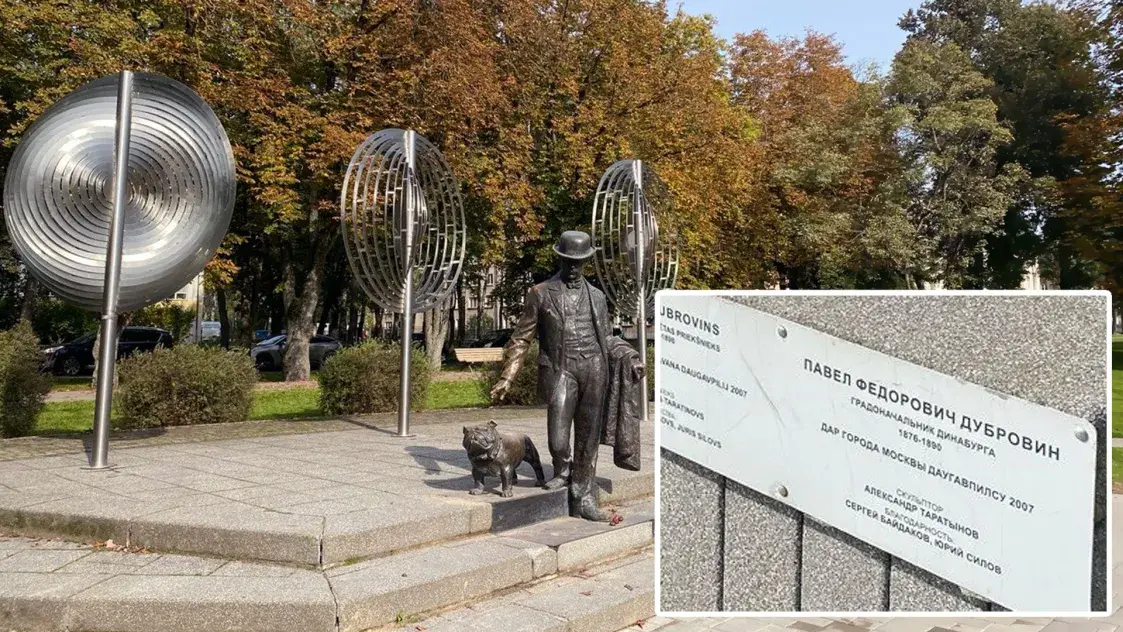
“Because of the economy, because schools offering education in Russian are closing. Around 60% of the population here speaks Russian, and taking away their right to be educated in their native language is a crime.”
“You won’t achieve anything good by using these methods. I was born in the Soviet Union. We were told to love Lenin, the Party and Brezhnev. We laughed at all that. The difference was that we couldn’t do anything about it, and we couldn’t leave. People here can leave. I talk to young people. Schoolchildren tell me, ‘There’s nothing for us here. We’re going to leave.’ And that’s what the current government has achieved.”
I ask Aivars whether he is preparing for a Russian invasion, whether he is stockpiling supplies. No, he doesn’t believe such an attack will happen and says it’s propaganda. After a few days in Daugavpils, I’ve started getting confused about whose propaganda is whose, so I ask him to clarify.
“It’s propaganda from the current government in Riga, designed to blame preparations for war for all the negative things happening in the country. Russia has no reason to attack Latvia. We’re members of NATO, so there won’t be a war in Latvia.”
“A lot of people thought there wouldn’t be a war in Ukraine either.”
“Ukraine isn’t a NATO member. And if we think NATO won’t be able to protect us, why do we need the alliance at all? We’re under NATO’s protection, full stop. No, I don’t believe in an invasion. But I do believe in a provocation, in the possibility of the so-called Donetsk People’s Republic scenario being repeated here. That’s where we’re heading. This region is particularly susceptible to it.”
Daugavpils resembles a regional centre in Belarus that has been scaled down to the size of a district town. There’s a long pedestrian street in the city centre, a fountain, coffee shops, outdoor terraces and a square — but no Lenin. The street layout is so reminiscent of Belarus that, if it weren’t for the Latvian signs, you could imagine you’d accidentally travelled all the way to Polotsk. Minibuses used to run there regularly.
And it’s very clean here, too. My next interviewee is about to mock this observation in much the same way Belarusians mock people who praise their clean streets.
Aivars Broks, director of the Daugavpils Music School, has run for municipal office several times and openly criticises the current leadership of the Daugavpils City Council.
“Despite all the hybrid adventures Russia is currently staging against the Baltic states, Poland and Moldova, I don’t think things are quite as frightening as they seem. We just need to stay alert and get on with our work. And our work is about security and identifying those undesirable, disloyal people who have no right to work in local government or state institutions.”
“Disloyal to what?”
“Disloyal to Latvia. There are about 50% of them in our city.”
“And how does this disloyalty manifest itself?”
“They’ve bought red carnations and are sitting in their kitchens, waiting for the tanks to arrive.”
We’re talking in the lobby of the same hotel overlooking the square without Lenin, where I met Inna yesterday.

“So you’re that disloyal, right down to the carnations?”
“Well, all right. Maybe out of those 50 percent, 20 percent have bought carnations, while the rest are waiting to see how it all turns out.”
The war has clearly divided people into two camps: those for Russia and those against it. But there’s also a third group, made up of people who want to sit on two chairs at once. They tell one side that things aren’t so clear-cut, and tell the other the same thing. And this in-between group is the worst and most dangerous of all. At least with those who have their carnations ready, you know where you stand.
But the divide is no longer about language, Broks says.
The language divide is a thing of the past. The new divide is about loyalty.
I ask all my interviewees to give me their rough estimate of public sentiment in the region. It seems there can be no other kind of sociology: any public statements justifying Russia fall under the Criminal Code. They can carry a prison sentence of up to five years.
“It wasn’t an attack,” someone told me on the street when I asked whether Russia might attack Latvia as it had attacked Ukraine.
“It wasn’t an attack” — you can go to prison for saying that. Another woman says that if she tells people what she really thinks, she’ll be locked up, and she still wants to “live in peace for a while.”
So it’s hard to rely on sociological research — all that’s left is to make a rough estimate. Inna Plavoka, for example, recognizes many of Chaika’s subscribers and tracks when they unsubscribe after a particular article — and what makes them come back.
Aivars is a well-known figure in Daugavpils. He is a musician, conductor and composer, has run a music school for many years, and has been elected to the Daugavpils City Council twice. I ask him to share his own “sociology.”
“The situation today is roughly this: 50 percent of the people in our region are Russian. Of those 50 percent, you can put half on Russia’s side and leave the other half out of it. We also have 30 percent of residents here who are neither Russian nor Latvian — they’re Polish, Ukrainian and Lithuanian. And you can put half of them on Russia’s side, too. Latvians make up only 20 percent of the population in this region — but even they can be divided in half.”
“And what should be done with them?”
“When the war began, new articles were added to the Criminal Code. The articles are there, but they don’t always work. For example, the security service says: we caught a blogger [justifying Russia — Euroradio] and brought him to court. The court started deliberating. They drag it out and drag it out for three months — and then let him go because there’s ‘insufficient evidence.’
The whole process is a bit of a drawn-out affair. They identify one person and put him in prison, and we rejoice. But there are so many of them! If you open those very social networks, you’ll see there are tons of them!
There should be people sitting at computers, identifying them and filtering them out, sending them somewhere. Either to prison, or deport them back somewhere. Seriously, if a person feels bad here, if they feel really bad here, if they’re suffering so much and cursing the place — well, then shouldn’t something be done?
The police need to be active. Some idiot shows up — well, lock him up for 15 days, or a year, or three, or five. But that takes funding, European money.”
“Do you think there’s absolutely no way to integrate these people or change their minds?”
“Before 2014, we tried to live in harmony, like in a cartoon. Latvians and people generally loyal to Latvia thought it would all somehow sort itself out. Gradually, people would understand that this was Latvia, not Russia, learn the language — and everything would be fine. It turned out that people had stayed in their own information bubble, and the year 2014 strengthened their Russian identity. Oh, Russia, how great it is, how great Putin is!
And these two camps will never come together. Something has to be done about this pro-Russian camp. Come on, guys, off you go! Back to your historical homeland — you can fight for Russia there, and even join the army.”

There are many Belarusians here. But they’re just like Russians. I suppose that, as in Russia, there are people in Belarus who understand what’s going on and don’t support Lukashenka. But what makes D-pils different is that we’ve taken in Russians who support Putin and Belarusians who support Lukashenka. That’s our thing".
Aivars says, “But maybe you’re a Russian spy yourself?”
I smile.
“Just kidding. I did a little digging.”
That evening, I recorded a short voice message for Yana. Both Belarus and Daugavpils have clean streets. In both places, people will tell you, “I’m not interested in politics.” But in Belarus, you can’t say out loud that you’re against the war, while in Daugavpils, you can’t say you’re for it. And, honestly, it’s unsettling not knowing what kind of TV your neighbours watch.
I finished recording the message and put on a Russian-dubbed American rom-com on YouTube.
Meanwhile, Yana is investigating pro-Russian sentiment in Narva, Estonia.
Day 3. Anya’s last day in Daugavpils: “You can’t treat elderly people like this”
Morning. A café in a shopping centre. The cashier asks me in Russian how many syrniki I’d like and whether I want sour cream. Then she switches effortlessly to Latvian when speaking to another customer.
I’m reminded of the A-100 chain of petrol stations in Belarus, where staff greet you in Belarusian, but after “Vitajem!” and “Dziakuj,” they switch back to Russian anyway. Even in Latvia’s most Russian-speaking region, you can hear Latvian being spoken in customer service.
I message Yana to say I’m heading out shopping. That is, I plan to wander around the shops and listen to what’s bothering the people of Daugavpils, if not Russian aggression. Along the way, I meet another young couple who aren’t interested in politics, and a young journalism student. She’s happy to give a comment, so I ask her about the war.
“Oh, politics… Maybe I’d better not. I’m actually studying in Moscow.”
All right, then.
Older people turn out to be more talkative.
“What do you think about Russia?” I ask a saleswoman in a small shop.
“Well, I’m a Russian citizen myself.”
“Oh, where did you come from?”
“I was born here and have lived here my whole life. Please, just don’t say my name or where I work,” Tamara [name changed] asks.
For a Belarusian journalist, such disclaimers are par for the course. It’s just unexpected to hear them in Latvia.
“I’m nobody here. If they kick me out of the country, I have nowhere to go.”
Tamara isn’t particularly attached to her Russian citizenship. She acquired it through her father when the Soviet Union was falling apart. She has already tried three times to pass the Latvian language proficiency exam — and failed. When Latvian customers come in, she speaks to them in Latvian, but grammar doesn’t come easily to her, and she keeps failing the exam.
“At this point, I probably couldn’t even write correctly in Russian anymore,” the pensioner says.

“The difficulties people are facing are simply inhuman,” Olga [name changed] joins the conversation. “I think you can’t treat elderly people like this, because this is mainly a problem for older people.”
“Are you a Russian citizen, too?”
“No, I’m a non-citizen.”
“A who?”
“A non-citizen.”
Non-citizen is a special status granted in Latvia to people who moved there from other Soviet republics after 1940. Their children, if born before 1992, are non-citizens too.
Today, around 8% of Latvia’s population are non-citizens, many of them living in Daugavpils. Non-citizens cannot vote or work in the civil service, law enforcement or the judicial system. The two non-citizen women I speak to suggest putting their documents “in a frame in a museum.”
“Yes, we’re ‘non-citizens.’ That’s what we are. We’ve lived our whole lives without citizenship,” Olga says. “There’s no other place in the world with a status like ours [except Estonia — Euroradio]. Do you understand? Nowhere. Even in African tribes — I don’t mean to offend anyone — but even there, every person has citizenship. Every single one. And we’re non-citizens.”
“My relatives moved to Germany, and soon they’ll be German citizens. But I’ve lived in Latvia my whole life, and I’m a non-citizen.”
Olga was born and raised in Daugavpils and has never lived outside Latvia. She says her mentality is local. But her father is Russian and her mother Ukrainian, which meant that in the 1990s she could have become a Russian citizen, a Ukrainian citizen or a Latvian non-citizen.
“We didn’t take Russian citizenship, and Latvia didn’t give us citizenship. I’ve never been to Ukraine, I don’t have anyone in Russia — my homeland is right here!” Olga continues. “My mother came here as a child and started first grade here. But because she arrived after 1940, I wasn’t entitled to a passport.”
“When the Soviet Union was falling apart, I was about your age. We went to the barricades to defend the new Latvia. They told us how good everything would be. In the end, they took away our Soviet passports but didn’t give us new citizenship.”
“At least I was younger when all this happened. But older people, who had already built up years of work experience, chose to take Russian citizenship because non-citizens weren’t credited with the years they had worked in other Soviet republics. People took Russian citizenship just for the money, for their work records — not because they didn’t love Latvia.”
Non-citizens can, however, become citizens by going through the naturalization process. It takes about a year. Applicants must pledge allegiance to the Republic of Latvia, pay a fee, and pass exams on the Latvian language, the Constitution, the national anthem and Latvian history.

“People tell me: you can naturalize. But why should I? I was born here and have lived here my whole life. This is my homeland,” Olga says. “Why can some people just live here, while I have to go through naturalization? Just because my grandparents didn’t live here before 1940? But how is it my fault that my mother gave birth to me here? If I’d been born in any other country, I’d have become a citizen of that country automatically.”
Olga’s friend, Anna [name changed], joins our conversation.
“A child born in America immediately becomes an American citizen. But we were born here, lived here, paid taxes — and we get nothing. We’re told to go and take exams.”
“I’m not complaining,” Olga says. “It’s just upsetting. It’s unfair and unjust. Estonia has non-citizens, too, but at least they can vote in municipal elections. I’ve lived in this city my whole life, and I can’t even vote in local elections.”
The children of all three women I speak to are Latvian citizens, but not because they acquired citizenship by birth. They are citizens because their fathers are Latvian citizens. It was only in 2019 that the Saeima approved a bill granting automatic citizenship to all children born to non-citizens. Since then, not a single non-citizen has been born in Latvia.
“People also like to say that we don’t like the Latvian language. It’s just that at our age, it doesn’t really stick. My son speaks three languages: Latvian, Russian and English,” Olga says.
“The more languages you know, the richer you are,” her friend adds.
“I understand Latvian; it’s just hard for me to speak it. Because we live in Daugavpils, where almost everyone speaks Russian. If I lived in another Latvian city, nobody would even call me Russian.”
Tamara, on the other hand, has a Russian passport and speaks Latvian, but struggles with the grammar. She has failed the written exam three times and has given up trying to become even a non-citizen, let alone a Latvian citizen.
“My children are citizens, my grandchildren are citizens — everyone’s a citizen. I just hope I live long enough,” the woman says.
She took Russian citizenship back in the 1990s to secure her pension. She wasn’t eligible for Latvian citizenship, and she didn’t want to lose the years of work experience she had accumulated in the Soviet Union. Tamara has long since retired, but she still works. Her Russian pension is 160 euros, and Latvia tops it up to 187 euros.
“Well, what can you do? The main thing is to stay healthy. As long as my legs and arms still work, there’s nothing terrible about it.”
We’re standing on the city’s main pedestrian street, where cafés alternate with small shops. I calculate how many flat whites you could buy with 187 euros. It comes to about 60 a month.
“Otherwise, everything is fine. Our city is very beautiful, and we do our best. The people are very nice. Of course, you can run into all sorts of people, but most of them are good and friendly,” says Olga, the non-citizen.
“One question… Do you have any red carnations to welcome Putin?”
“I used to bring red carnations on May 9 because my grandfather fought in the war and was wounded. He later lived here, and he was buried here. So yes, I brought him carnations as a defender. That’s the only reason. But to wait for someone to come here… No, I don’t have thoughts like that. It’s ridiculous. At least I’m not waiting for anyone.”
“May I take your photograph? As you said, to put in a frame in a museum.”
“You know, I’d rather you didn’t. It’s not that I’m afraid; it’s just the times we live in… I’ve told you everything I could, sincerely.”
I stroll along the pedestrian street. A large cinema recently opened in the city. The films are shown with Russian subtitles. The last time I saw a film with Russian subtitles was on Netflix, and before that, in Belarus.
The street leads to a square, where a pink Zaporozhets car is parked. Leaflets for Olga Petkevich are tucked under its windshield wipers. She is a local journalist who represents the centrist party Latvia First. Only after arriving in Warsaw will I read that Petkevich has one of the strongest individual results in these elections, and that Latvia First has emerged as the leading party in the Latgale electoral district.

Petkevich would comment on the election results as follows:
“It’s quite simple to me: enough of dividing people into Russians and Latvians. Let’s work together to make our shared life better.”
But in my evening voice message to Yana, I lamented how complicated everything was in Latvia. I spent the evening on a nostalgia tour: herring under a fur coat, “Korzinochka” basket cakes, and tubes filled with condensed milk and marshmallow (all at once!).
When news broke that a group of armed men had entered Latvia from Belarus, I received a voice message not from Yana this time, but from my editor:
“Get that article in quickly, before they hold an independence referendum in your Daugavpils.”